Carved light from the Ore Mountains
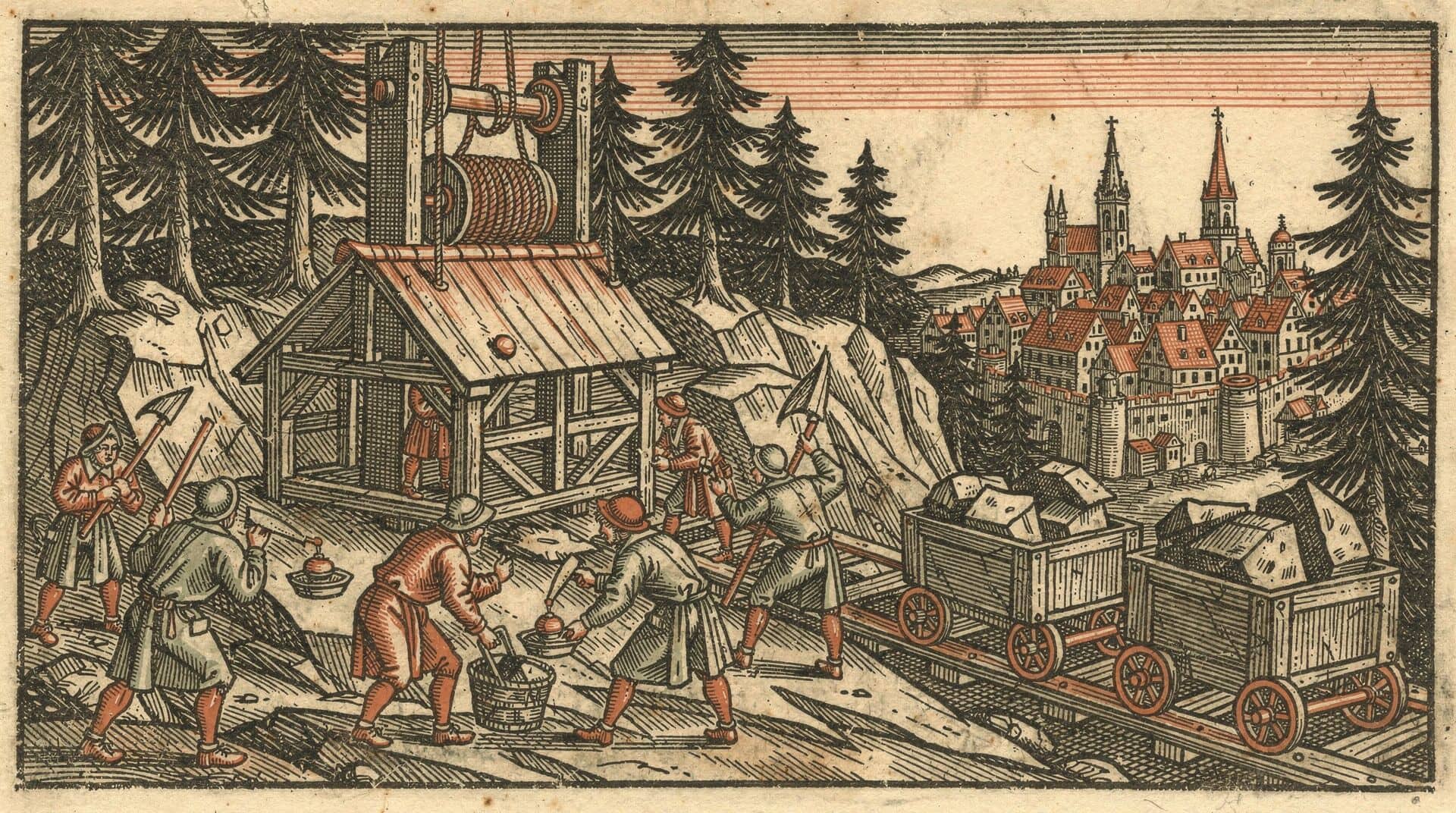
For more than eight hundred years, these mountains on the border of Saxony and Bohemia gave up silver, tin and cobalt. As the mines faltered, mining families turned to the lathe and the carving knife, and the Erzgebirge became famous for its wooden toys and its Christmas lights: candle arches, turning pyramids, smoking figures.
Those pieces are still turned, carved and painted in small workshops here. This chronicle tells where they come from, how they are made and how to look after them.
Glück auf!
Miners in the Erzgebirge have greeted one another with “Glück auf!” since the late 1600s. It began as a wish that the rock would open onto rich veins of ore; in time it also came to mean come back up safely. People in the mountains still say it.
The Erzgebirge Guild is a name for a circle of small, independent workshops in these mountains: often one turner, one painter, one family. This chronicle tells their story, from the mines and the miners to the craft and its customs. Every date in it comes from a source, listed at the foot of each page.
From the mountain to the workshop
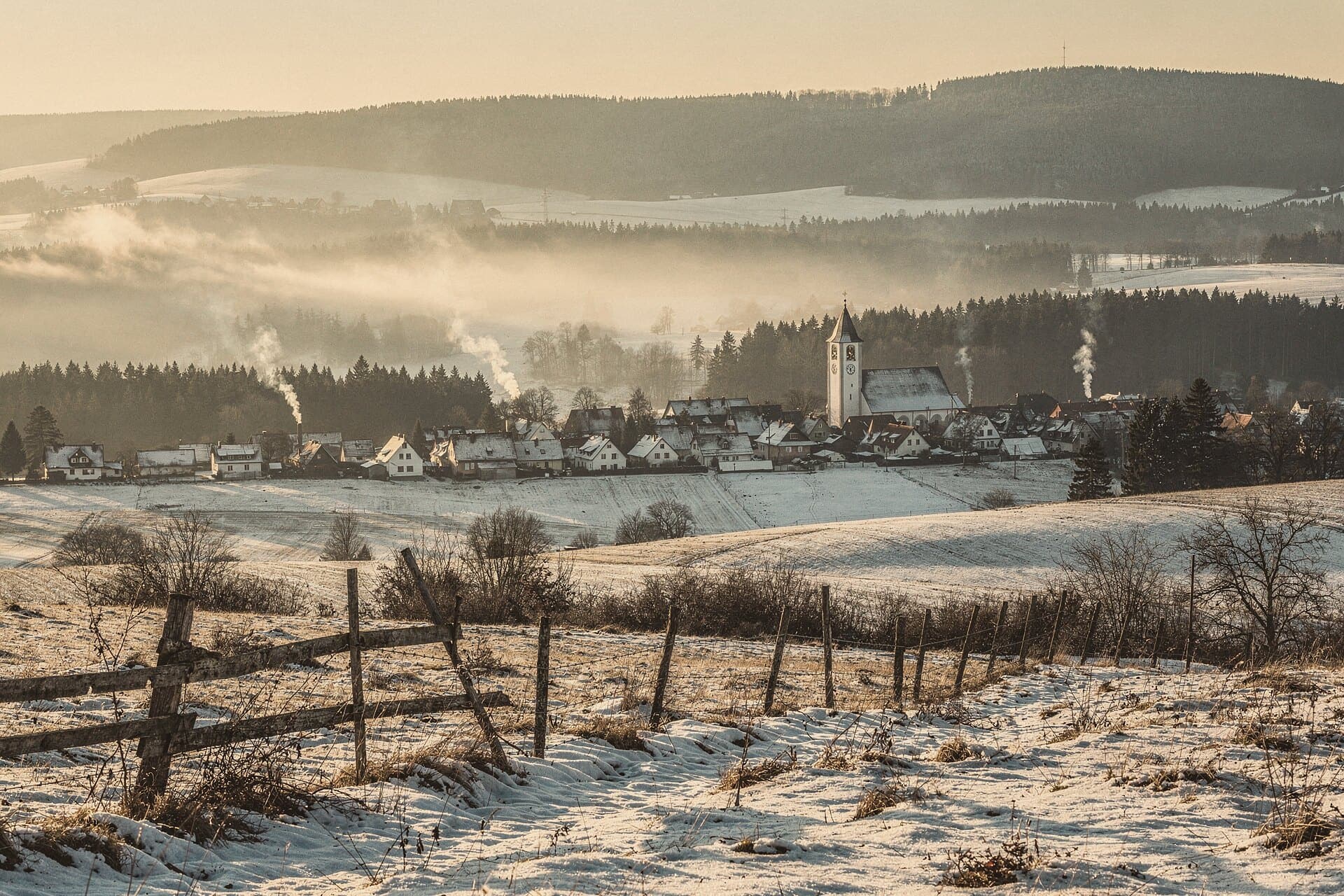
The Ore Mountains
A border range between Saxony and Bohemia, named for the ore inside it. Silver, tin and cobalt were mined here from 1168 into the 20th century.
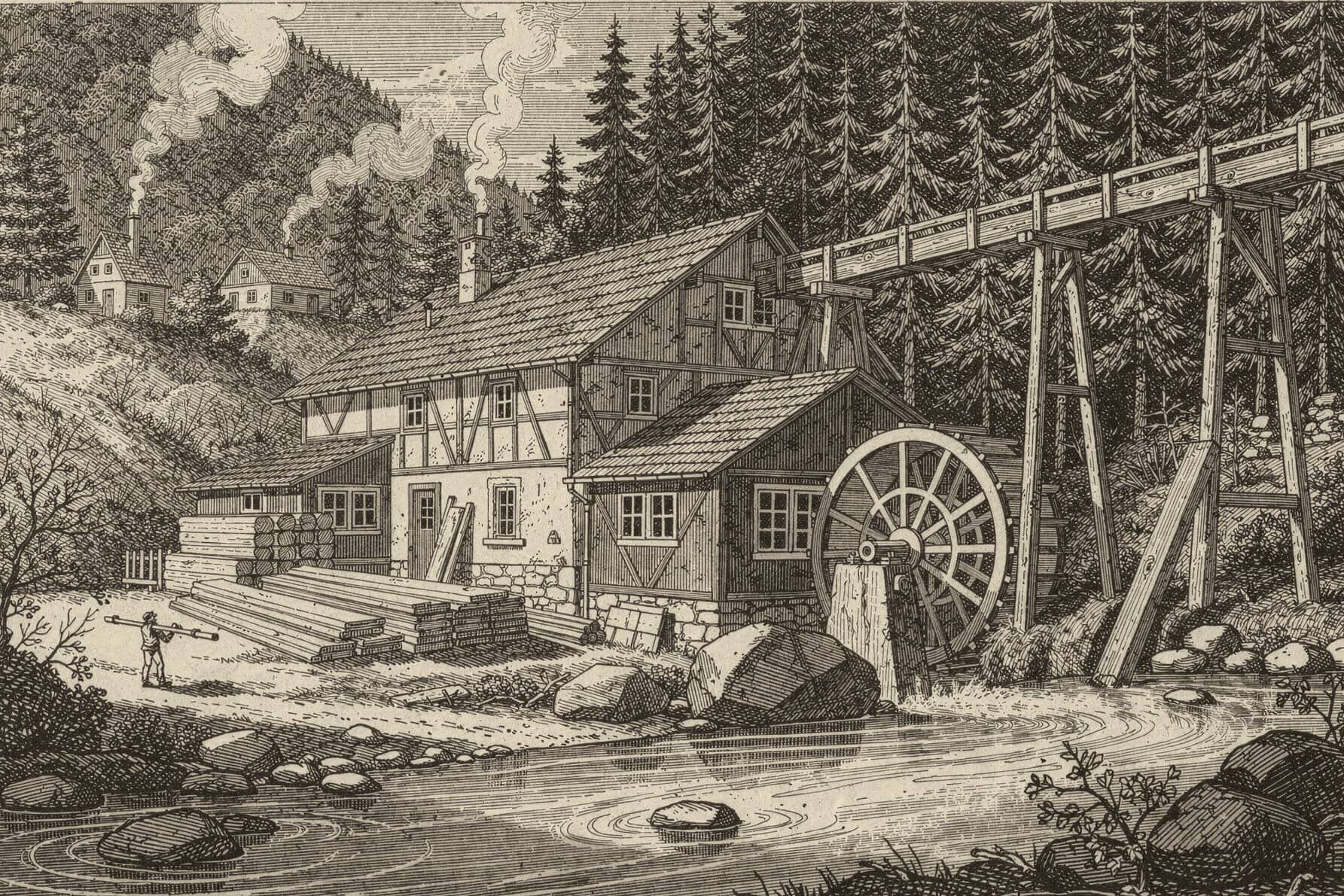
From Ore to Wood
As mining faltered, the mining villages turned to the lathe. How wooden toys and Christmas lights became the mountains’ trade.
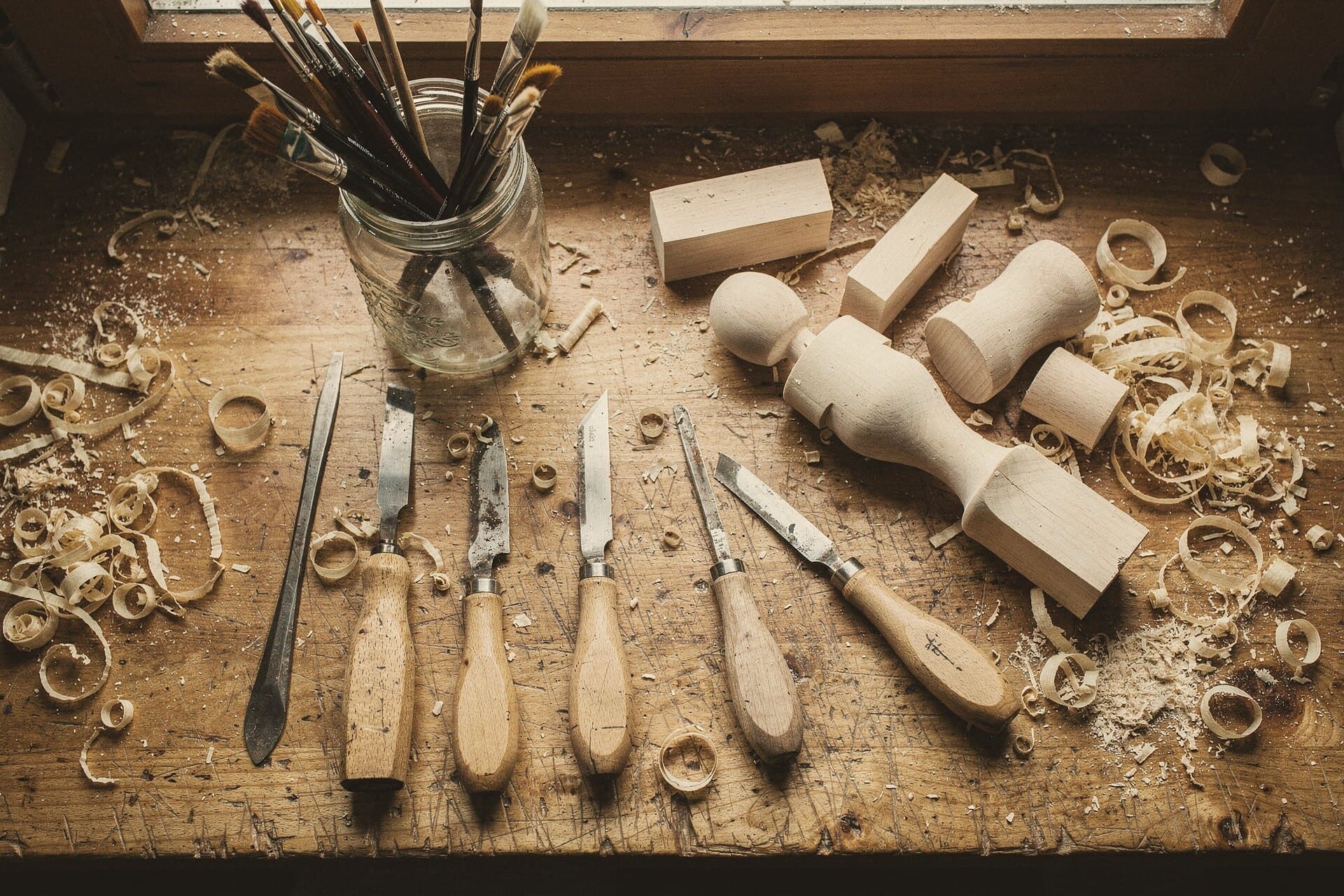
The Craft
Linden, beech and spruce; the lathe, the knife and the brush. How a smoker is made and why a pyramid turns.
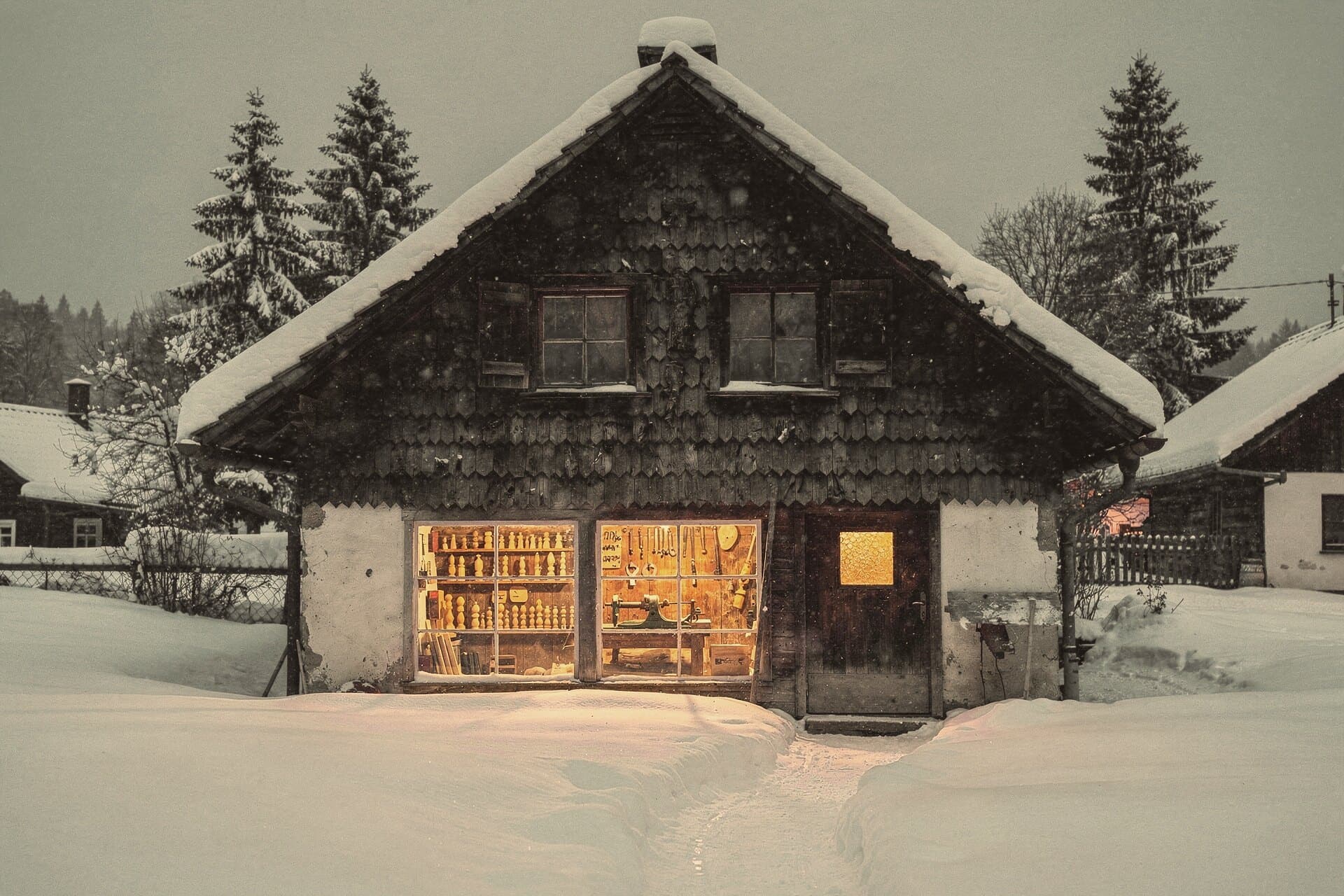
The Workshops
Small workshops, often a single family, and the trades that keep the old forms alive.
The Pieces
Seven forms that made the Erzgebirge famous, each with its own history.
 No. I
No. IDer Räuchermann
The smokerA little turned figure that puffs fragrant smoke from an incense cone hidden inside.
 No. II
Die Weihnachtspyramide
The Christmas pyramidA carousel of figures on tiers, turned by nothing but the warmth of its candles.
 No. III
Der Nussknacker
The nutcrackerStern kings, soldiers and foresters with a lever in the back and a jaw for walnuts.
 No. IV
Der Schwibbogen
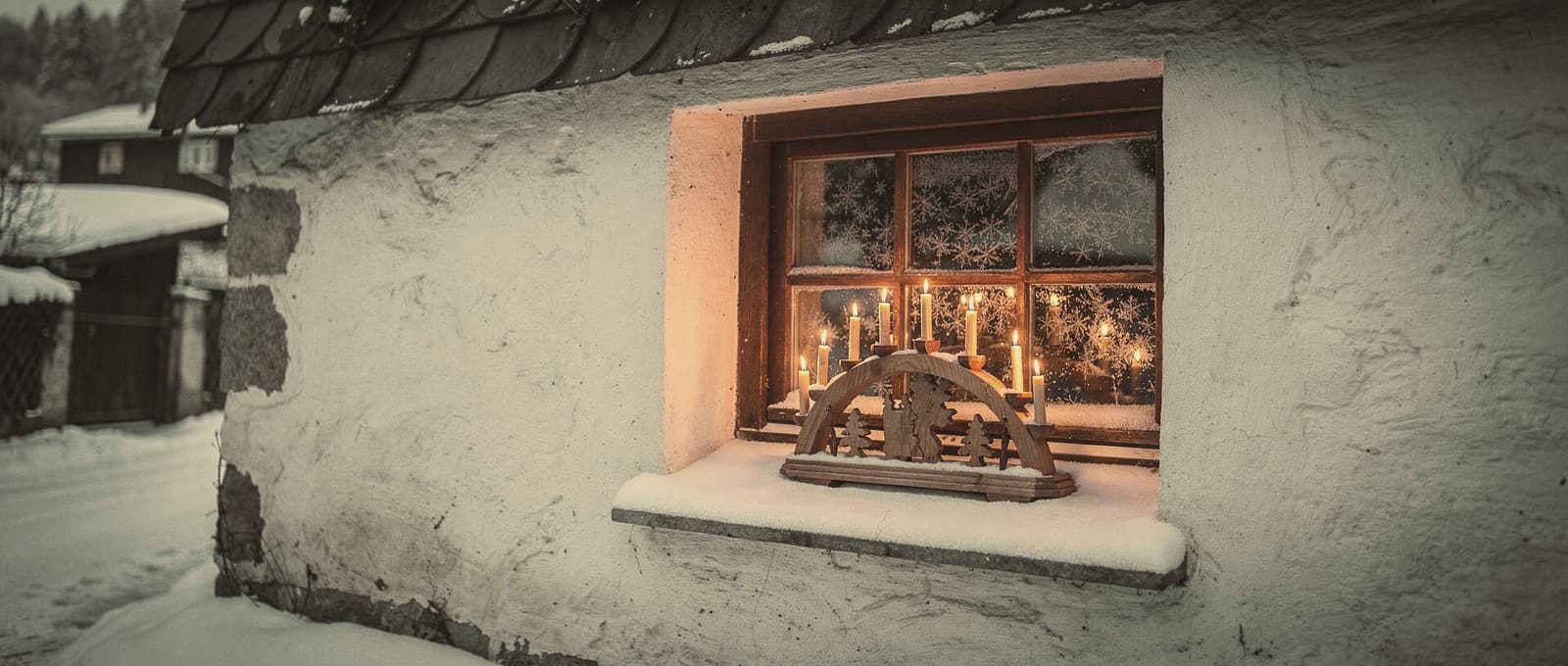
The candle archAn arch of lights for the winter window, first forged in iron in 1740.
 No. V
No. VEngel und Bergmann
Angel and minerThe candle-bearing pair, a miner in parade dress and an angel in white, since the 1830s.
 No. VII
Reifentiere
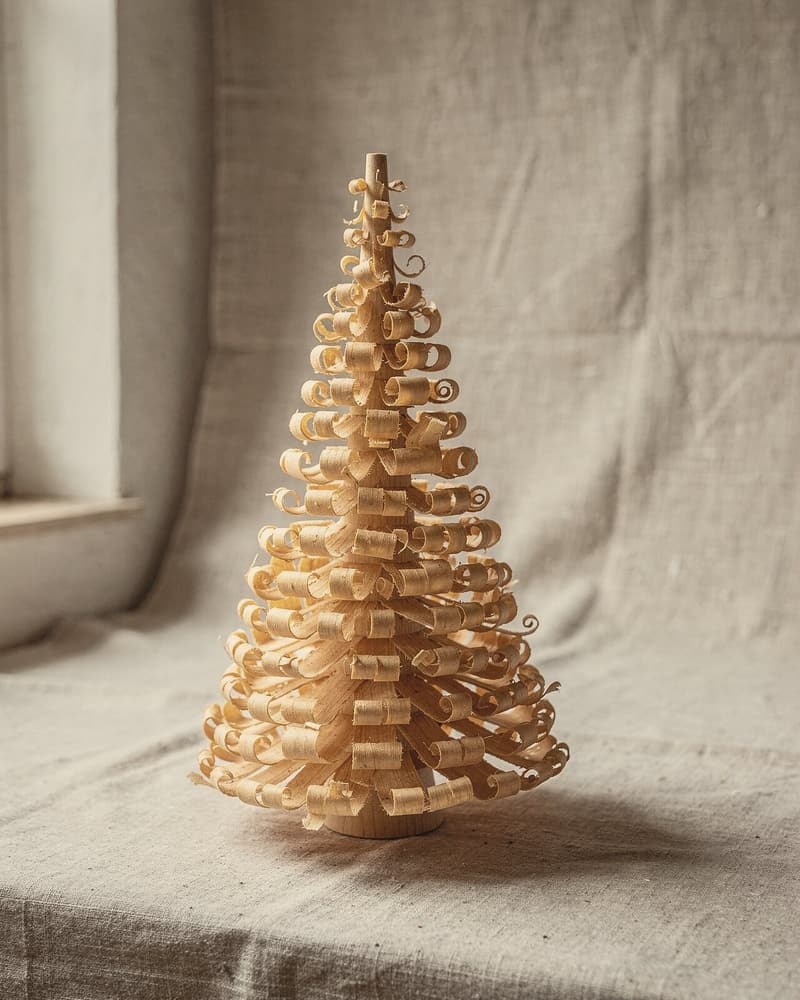
Ring-turned animalsA herd split from one turned ring of spruce, a craft found only around Seiffen.
All through Advent the industrious miner works and carves all sorts of mechanical toys, mostly models of mining … or he lights them up to delight his family on Christmas Eve.
Advent in the mountains
- First Advent weekend
Pyramidenanschieben
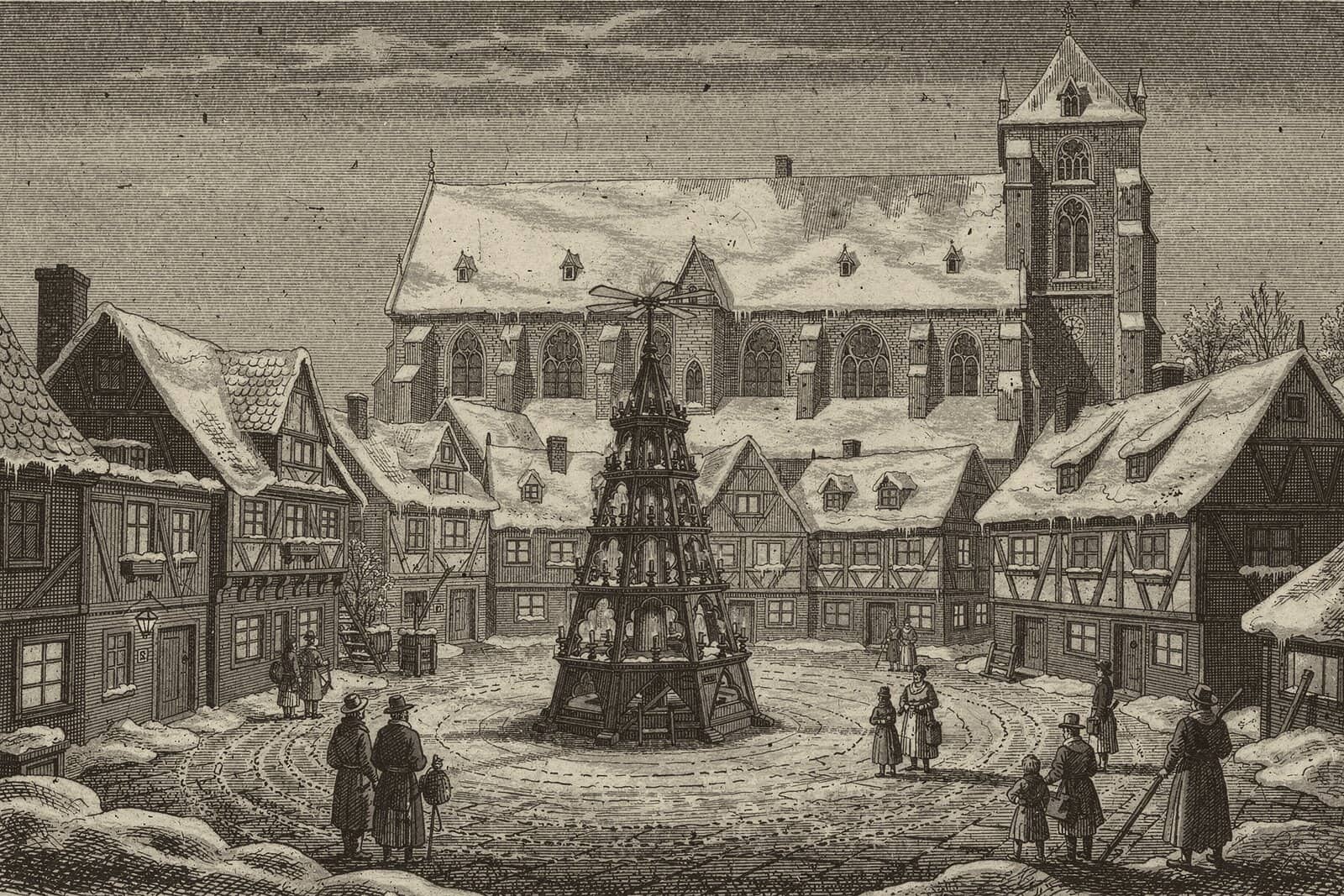
Setting the pyramids turning: towns start their great outdoor pyramids for the season, often to a miners’ brass band.
- Advent weekends
Bergparaden
Miners’ parades: miners march through the old mining towns in parade dress. The last and largest is in Annaberg-Buchholz on the fourth Sunday of Advent.
- Winter evenings
Hutzenabend
Neighbors’ evening: families gather around one warm stove to work, talk and sing.
- Just before Christmas
Mettenschicht
The last shift: the miners’ final shift before Christmas, ended early with a prayer, a song and a shared meal.
- Christmas Eve
Neunerlei
Nine kinds: a Christmas Eve supper of nine dishes, each with its own wish for the year ahead.
From the Stories
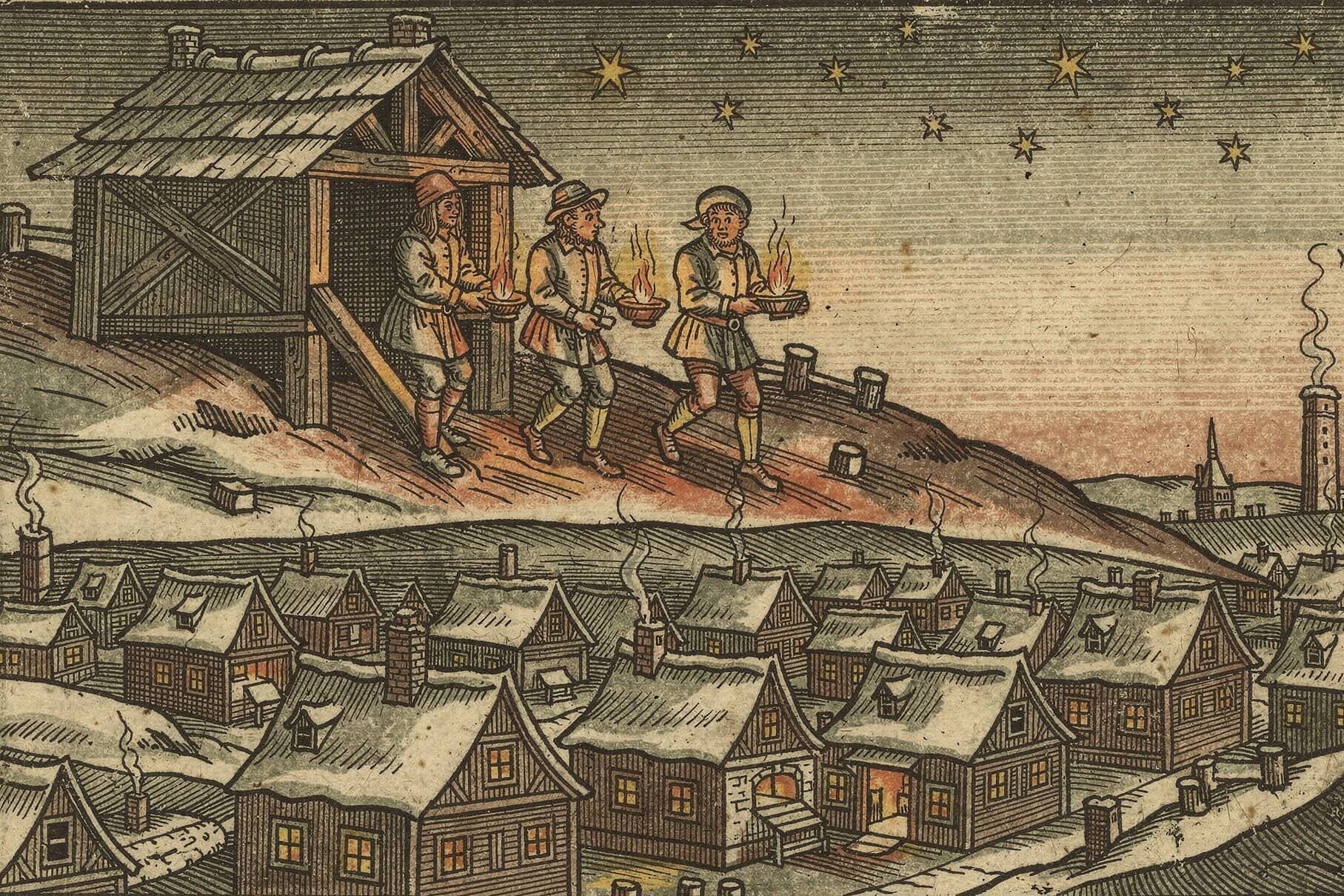
Why the miners longed for light
In midwinter, many Erzgebirge miners went down before dawn and came up after dark. What the record says about their light, and the story the mountains tell about it.
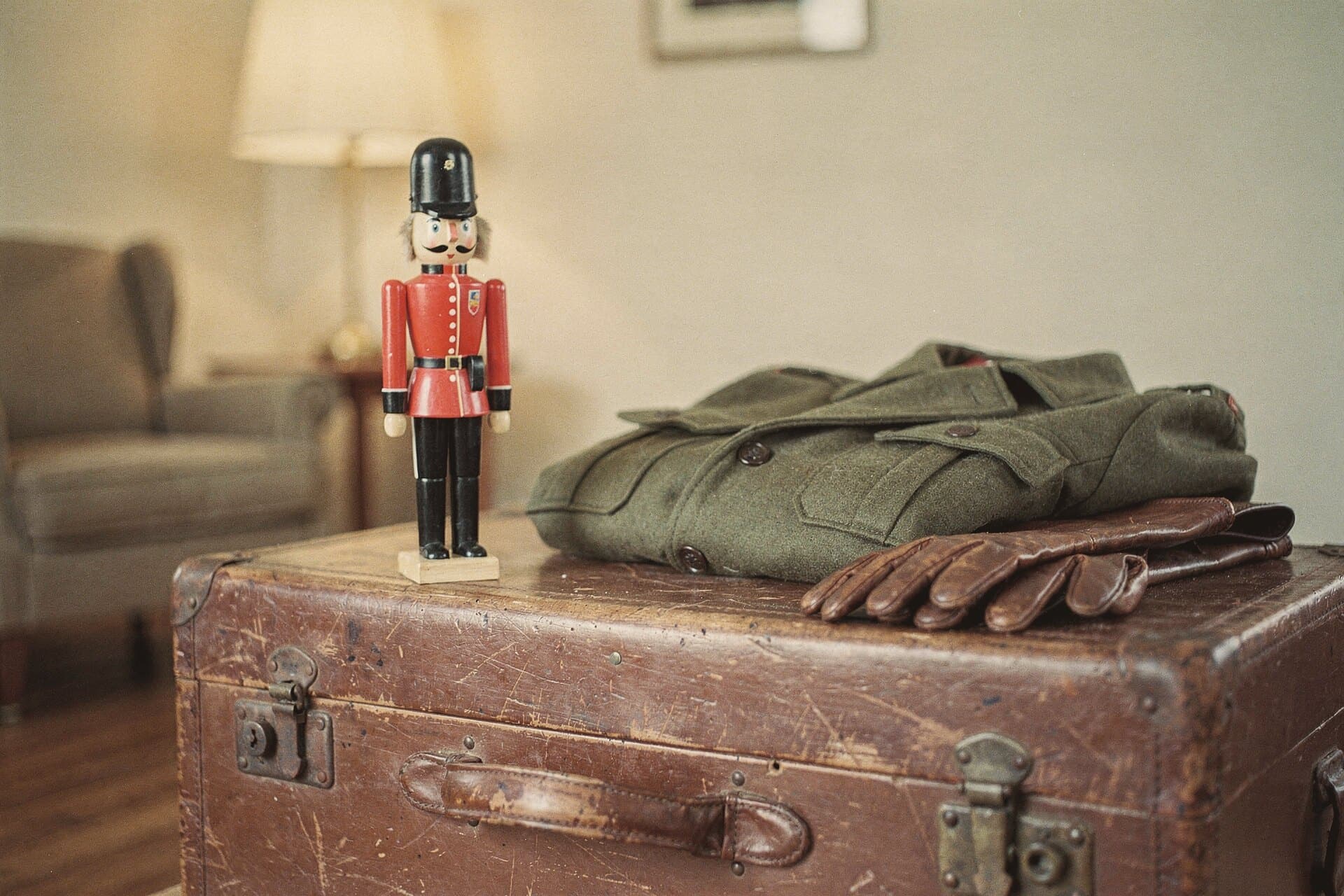
How the nutcracker came to America
A carved nut-biter from the German mountains, a king from Seiffen, a ballet that bored its first audience, and a Christmas Eve in San Francisco. How the nutcracker became an American Christmas.
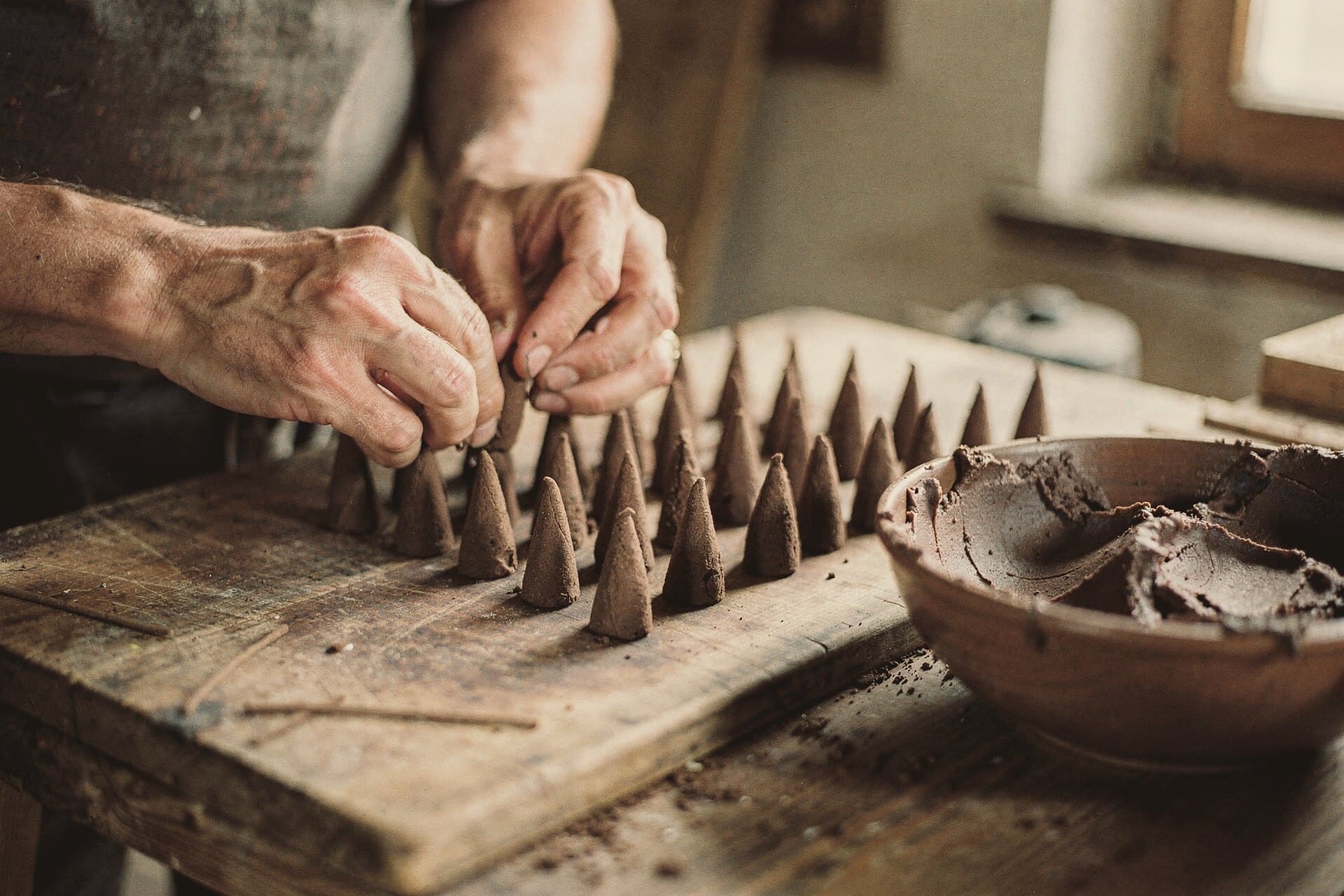
Of smoke and incense cones
Frankincense against the spirits of the twelve nights, a dough of charcoal and beech flour, a kitchen in Crottendorf and a turner’s idea about pipes. The story of the smoker and the little cone that makes him smoke.